
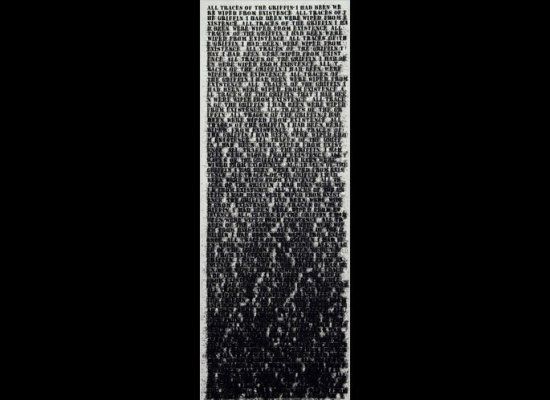
An article by Carol Vogel in yesterday’s New York Times brings me to focus here on item number one in The List. The article was a review of Glenn Ligon’s upcoming retrospective at the Whitney museum in NYC. Glenn Ligon is a modern painter and conceptual artist whose work focuses on his view and exploration of American history. There is much here to use as fodder for a dinnertime discussion with your kids.
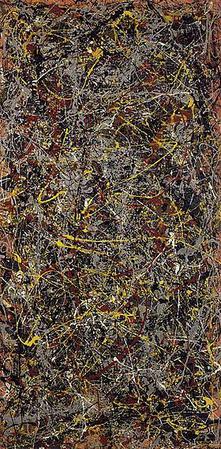
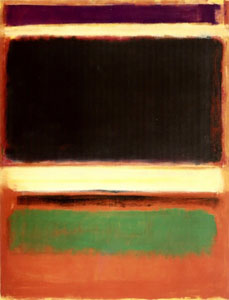
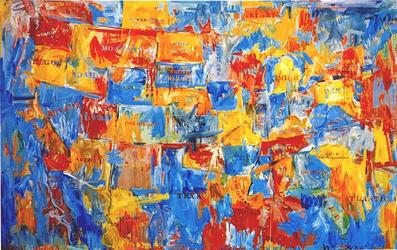
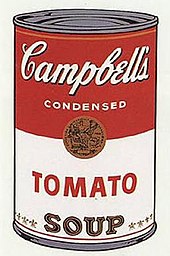
First a bit of art history to set the stage with. His work seems to fall well into the broad category of Conceptual Art. This movement followed Abstract Expressionism (think Rothko and Pollock) and Pop Art (think Warhol). Ligon’s work seems heavily influenced by a Neo-Dadaist artist: Jasper Johns (think American flags and numbers), …and if all this is making your head spin either skip on through or, see the bottom of this post for examples of work by these artists. Conceptual Art is a cool ah, concept to talk with your kids about. It very simply put, is art that focuses on ideas rather than aesthetics. The Dadaist, Marcel Duchamp was amongst those setting the stage for conceptual art by leading us to question what art is exactly and to stretch our expectations of what art should be.
The work of art is always based on the two poles of the onlooker and the maker. Marcel Duchamp
Years later, Conceptual art began to look at the context and perception of words, objects and ideas. In Ligon’s work he often uses words or phrases from other people and reproduces them in ways that urge the viewer to look longer and harder at what has been said. Taking these words into a new frame or focus pushes us to contemplate their ideas as those outside our own experience bringing us possibly, to a new understanding. As Ligon himself said:
You have to be a bit outside of something to see it
The New York Times article about his work is well titled: The Inside Story on Outsiderness. Look with your children at his art; doing so may move them towards that first item on our List: to widen their perspective and encourage cross-experience understanding. Glenn Ligon’s art is about important and challenging concepts developed in large part by his experience as an African-American gay man and yet, is presented in ways that are approachable. Challenging but not crushing of a child’s interest. My friend described them as “minimalist art provoking maximum discussion”.
©
Representative works discussed above:
Here revisited, are the reasons I have gathered from family and friends for why children should be exposed to, taught about and encouraged to experiment with art. Art, in all its forms is of enormous value but, is being given short exposure by schools and parents often struggle with how to promote arts education at home. The list is a work in progress; please add to it on your own or, in the comments.
Art washes away from the soul the dust of everyday life - Pablo Picasso
©
Just a brief note of contemplation:
It has been a long and stressful stretch of work. Extra hours filled with lots of sick children both at work and, at home. I have been feeling the imbalance that for me occurs when my mind works overtime and my body doesn’t get out the door to work at all. So, today I was happy to be at last moving more than thinking.
I find a certain solace in repetitive brute work. Hiking steadily uphill with a big pack. Mowing the grass with a hand mower. Digging a big hole in the sand. Shoveling snow. You might guess I problem solve, create or brainstorm while grunting. No, I just completely relax. Completely zone out and… refill the tank.
Now, after first a bout of shoveling followed by a long walk in the snow, I sit, calm again. Ready maybe, to face the week ahead. Oh, its only Friday? Ahhh, good. More grunt-work tomorrow.
As promised, I asked. At dinner a few nights ago over something kid friendly like spaghetti, I asked my three. Why dear children, is it important to be exposed to art, taught about art and encouraged to make your own? First, the surly 11-year-old grunted “History”. Then the sick 15-year-old mumbled “Dunno”.
I was saved by the 9-year-old who got the conversation rolling. He started with a description of how cool it would be to go to a museum with a friend and be able to have favorites he got to see. How fun it would be to talk about the art. That he would tell his buddy about the refrigerator paintings (take a look at Mark Rothko’s paintings to see what he means). He got the other kids brainstorming and we started their list of reasons children should be exposed to art in all its forms and encouraged to make their own.
We would like to generate an ongoing list here of the reasons for arts education. Please add you ideas to the list. Ask your kids tonight and see if you can push them beyond “Dunno”.
©
In medicine physicians often talk about the patient concerns that come up in the moment we are leaving the room. The “oh by the ways”. The comments that come when the doctor has a hand on the doorknob, one foot out the door. Mostly, these are simple, quick requests (work notes, PE excuses and the ilk). But every now and then they are real humdingers. Yesterday I had one of those moments, and it got me thinking about what I do and how I do it.
Work has been busy lately. The clinic is full of kids with colds, earaches, and influenza; lots and lots of sick kids. The volume of patients is pushing us to be very time efficient, very focused in our approaches to care. Yesterday in the afternoon a teenaged patient came in with several separate non-urgent concerns. We worked through the history, examination and plan for each of these and I needed to move on to the next patient. Make that patients - four were waiting. So when, as I was touching the door handle, their parent asked her if they wanted to tell me about another issue I admit that I inwardly groaned. Outwardly I explained that I had four people waiting and that maybe we could schedule an appointment next week to discuss this concern. But something was bugging me about the atmosphere in the room. Some alarm beeping in my head made me stop, take a deep breath and ask if I could on second thought, hear what was worrying them.
It was one of those moments that highlights how much of medicine is an art. Much of being a good doctor involves having an emotional intelligence that helps us know when to take our hand off of the door. I wish that I had never actually reached the door. I wish that I had responded earlier in that visit to the little alarm in my head.
There is lots to read on the internet now about how a patient can prepare for a visit with their doctor. Ideas about advocating for one’s healthcare. Making lists of questions to ask. All often form good advice. I would add this piece of advice for patient interaction with physicians: state your fears upfront. Tell the doctor what your biggest worry is. Tell them what keeps you up at night. Doing so is important for several reasons. We can often calm your worries better if we know what to approach. You are your child’s expert and have input that is valuable to us. We may though, need to schedule another appointment. And, of course if the doctor manages to get out the door without knowing that last “oh by the way” humdinger we may have failed to treat the one medical symptom that actually would have scared us and kept us up at night.
My teen patient will be fine now but they needed that last moment of my attention. Without it they would be very ill today. The other four patients? They waited and understood that I was late because I had been helping another child. They understood that I not been off doing my nails or reading a novel. That is for today.
©
For more insight into the approach physicians take to office visits read this excellent outline by BrianVartabedian. It absolutely sums up how I also try to structure a patient visit.
The most beautiful thing we can experience is the mysterious. It is the source of all true art and science. He to whom this emotion is a stranger, who can no longer pause to wonder and stand rapt in awe, is as good as dead: his eyes are closed. - Albert Einstein
My eldest is almost fifteen and is beginning the process of planning his high school and college “careers”. This proves to be a rather stress-inducing experience; apparently very different from the casual way I approached high school. Late the other night he admitted he was worried about choosing classes for the upcoming years. So, in the spirit of facing our fears we curled up together right then and went the through the high school graduation/college entrance requirements. The school had provided worksheets and lists which we dove into. Amongst scads of science, math, and language requirements I learned that of the 230 units required to graduate only 10 of those need to be in arts education.
This made me start thinking again about the lack of value we place on arts education and the consequence of this devaluing. This is evident in the currently proposed national budget; some members of the House of Representatives have proposed deep cuts or even total elimination of the National Endowment for the Arts. This represents a huge loss nationally. On a more local level our school systems face severe budget crises and are viewing arts education as expendable - Leaving it acceptable to require only 10 units out of 230 for a young person to graduate from high school and enter college.
What is the cost of this devaluing? Put differently - what is the value in teaching kids arts? We teach art and teach about art because doing so:
Art washes away from the soul the dust of everyday life - Pablo Picasso
My son and I filled in the worksheet with lots of science, language and math. And art? Well, not so much. He moaned at my suggestion of various art classes let alone art history. His groaning made me realize that I had before me, fodder for another great dinnertime conversation. Tonight I am going to ask them why I talk so much about the arts. Why I drag them to museums? Why we have lots of paint, pastels and paper? Why are our walls covered with art? They may generate some new ideas from my list above. I’ll get back to you with them.
If you want to help promote arts education yes, of course generate your own dinner table conversation. You can also look at the work of the Americans for the Arts Action Fund.
I have tried hard to avoid adding to the general buzz surrounding the “Tiger Mother”. I resolved to stay out of the fray. Really I did. But, a convergence of discussions with reading a review of the book has pushed me into adding my thoughts to the collective. I’ll be brief.
Twice this week I have had conversations about girls feeling the pressure of attempting to be “perfect”. One girl was in tears telling me that she was trying hard in all she does (arts, sports, school) to literally be perfect. The pressure had brought her in to see me. The mother of another talked with relief about how her junior high aged girl was moving away from a friend who on the surface seemed so very “together” that her child had been feeling the strain of trying to keep up.
I had heard of the Tiger Mom; she sounded quite awful when I listened to the general hub bub. Then one day earlier this week I found myself stuck in a waiting room reading a review of her book in Time magazine. A review that was surprising. I tend to try to look at life from all sides and enjoyed finding through this review that perhaps the feline had some good ideas for raising children after all. Do I agree with them all? Well no, of course not. However, she has some powerful theories about the value of hard work and repetitive practice. I went home that evening and announced to my kiddos that from now on they were going to practice their instruments longer. Everyday. No more nice mom.
However what is clear to me about her child raising technique is that it is fraught with danger. The danger that comes when a child is held up to perfection as the yardstick by which they are being judged and by which they judge themselves. So the question becomes how to find the balance. How to push our children to work hard, really hard so that they become the best versions of themselves they can be, while also teaching them of unconditional love. For with this love comes an innate self-confidence and strength that will allow them to use their hard-won skills in creative and meaningful ways.
Perhaps we explain to them that perfection is not obtainable. It is defined individually and changes with the viewer’s perspective. That it does not actually exist. Nor would it be desirable if it were found. Our children need to accept that life is messy and people are complex. The friend who seems so together, so perfect, may have hidden flaws. The people we most enjoy being with, those that most fill us with joy, are often those that are flawed. Take one of my dearest friends. She is great looking, can make any item of clothing look like haute couture, is kind as the day is long, a great athlete and, a bit of a slob. Yes, a slob. But, we all love that about her. It makes it easier to be with her. Her house is great to be in - enter there and immediately relax for, while there you know what really matters the most to her: your friendship.
Our challenge as parents is to endorse maximum effort and to teach the embrace of the diverse, unexpected and messier parts of living life. How do we proceed? Perhaps by opening this dialog with our kids. Ask if perfection is a goal? Is “perfect” possible? At what cost? Let me know what you learn.
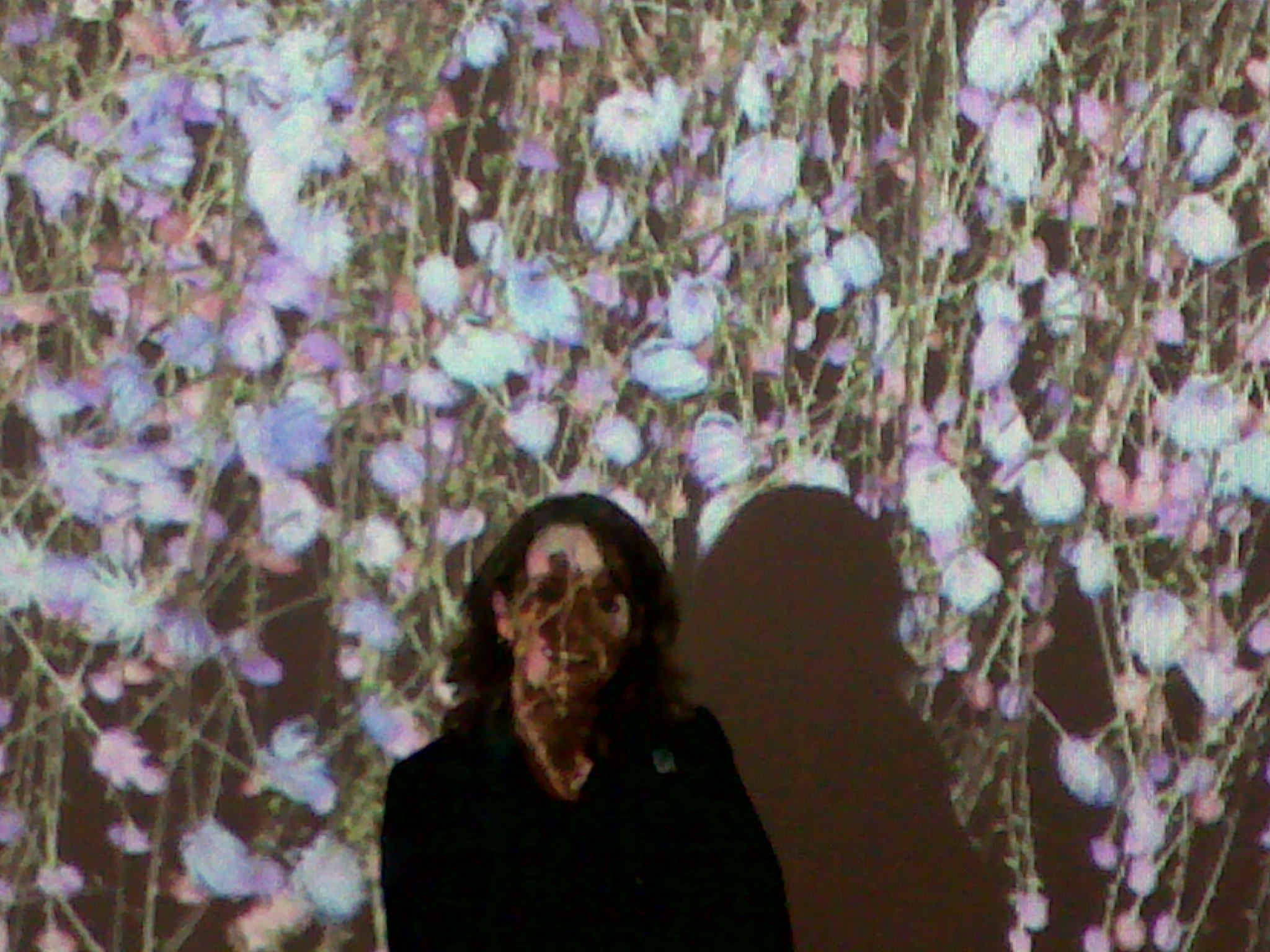 This weekend I went with my daughter to the Crocker Art Museum in Sacramento and saw a work named Rapunzel #10. It was breathtaking and moving. Literally moving. It was a computer generated image of hanging flowers swinging in a computerized breeze positioned in a stairwell. As we walked up to begin our afternoon of art-looking, we were both taken by its beauty. So much so that at the end of the day, after lots of great art (and a yummy piece of cake and tea) we went back to Rapunzel. We sat in the stairwell, side by side quietly watching the flowers swing in the breeze.
The night before the two of us had gone to see the movie “Tangled” also a reference to the story of Rapunzel. This coincidence made me pay special attention to the title of our stairwell art and to ask her, when it comes to art, “what is in a name?” This question blossomed with the hanging flowers into a good discussion. My daughter noticed that in another equally notable exhibit we saw that day The Color of Light, that the painter named many of his paintings “Phenomena”-this or “Phenomena”-that. We started asking why? What was he asking us to pay attention to? With the installment Rapunzel #10 a placard asked us to consider the story of Rapunzel and the image’s relevance to addiction and child abduction in contemporary society.
Hmmm…I just wanted to enjoy the emotionally and literally moving flowers. I wanted to meditate on my own response and here was the artist jumping into my experience and demanding that I turn my thoughts elsewhere.
What is in those pesky names? Perhaps ask your kids at dinner tonight. Why do they think an artist leaves a work named “Untitled”. Why would they instead choose a powerful reference like “Rapunzel”? How does that change our experience? Perhaps - turn the question towards a book your child is reading: why did the author choose the title… can you come up with a different title? Or, look together at some art and discuss the names you find. In reference to the name of his work Women and Bird in the Night, Joan Miro in a rather satisfying explanation said:
It might be a dog, a woman, whatever. I don’t really care. Of course, while I am painting I see a woman or a bird in my mind, indeed very tangibly a woman or a bird. Afterward it’s up to you.
A Turkish artist, Ihsan Cemal Karaburçak, explained his very different approach of leaving works untitled:
I essentially do not give titles to my paintings. A landscape could portray any given place. What does it matter! A tree, a house, a mountain, a cloud, a flowerpot or an apple can be found at anytime, anywhere. The important thing is how it is tempered with, how it is interpreted and depicted. The object is only the means through which the artist reflects his inner world on a board or on a canvas. What matters is the inner world of the artist.
Or, create some art of your own and try coming up with names. You may of course end up choosing “Untitled”.
Jennifer Steinkamp‘s website has a video of one installment of Rapunzel.
Paul Jenkins is an abstract expressionist painter. This means that simplistically put his work is in the same general category of other artists I have written about here, Rothko and Pollock. You can see his Phenomena at his website.
©

