Monthly Archives: January 2011

TV dinners

I enjoyed Dr Vs post about writing being a habit despite the kids and puppy (oh I know that combination all too well). I read his link to The Myth of the Perfect Writing Environment … I took his message to heart. I tried to get up at 5 AM like him. Really I did….but eww? It was dark out? And cold? Ick.

So, to get my writing in tonight I let the kids watch Home Alone 3 and eat dinner on the floor in front of the TV. I’m guessing that is not what he meant me to do? But, they don’t watch very much TV really, and most of the time they are sitting with me at the table being force-fed art history so its okay - right?

Why February is hard for Pediatricians

It has been rough in the office lately. January is always rough for pediatricians…February is worse. Everyone and their sister is sick, the doctors all get sick too, those of us left standing work extra….Oh well. At least the great thing about pediatrics is that the kids are still cute and make us smile.

Part of what makes the days hard is also that many of the parents who come into our offices are exhausted from lack of sleep and worry. They need our help also. But when so much of the time all we have to offer is the dreaded diagnosis of yet another viral infection they feel frustrated. Sure, parents come in for reassurance - they want the piece of mind found in knowing their doctor did not hear a pneumonia or see an ear infection. However, much of the time there is often the hope that they will be handed a medicine that will help their child and get the parent some much-needed rest. I know. I’ve been there; I too have kind of secretly hoped there really was an ear infection to be found because I knew that could be “fixed”.

Too often we can’t offer a fix; we can only offer the diagnosis of “viral infection”. Let’s face it - that is read by the parents in our office as having the subtitles: “I’m back on my own with my sick child” “no sleep tonight” “I wasted my money/time”. And for us as physicians honestly, handing over the diagnosis that clearly deserves an antibiotic is much easier, much more satisfying than saying yet again… it is “just” a virus (of course this concept of a viral infection being a “just” could take up a whole other blog post).

Then there are the even harder visits when we find an ear infection but need to embark on the discussion of “to treat or not”. Claire McCarthy, M.D. recently posted a wonderful article about this very discussion: Shades of gray: Why medicine isn’t always as clear-cut as we’d like. Her words and perspective have stuck with me through the past rough days at work. They have helped to reassure me and to guide me.

The practice of pediatrics is not unlike the practice of parenthood: full of uncertainty, impossible to understand completely and done best when the child is more important than anything else. We’re coming at it from different places, but we’re in this together.

Thank you.

Dinnertime Art Continued: Art in the Moment

What do Jean-Michel Basquiat, Tino Sehgal and Andrew Goldsworthy have in common?

Well, I didn’t really expect you to get that one. But the answer to this question is one worth discussing (in the ongoing dinner-table conversation with your kids that I have by now stirred up).

Jean-Michel Basquiat was an American who began as a graffiti artist and developed into a respected painter of canvases hung in galleries and museums. I was fortunate this year to see an extensive retrospective of his work in a museum. His paintings have an Afro-Carribean influence and also show hints of the influence of other artists of his time. But, for the purposes of our conversation, think of him as a graffiti artist. Andrew Goldsworthy is a british sculptor who works primarily in the outdoors making site-specific and land art. He makes art created out of what he finds in nature. Breathtaking, monumental art made of icicles, twigs, leaves and piled rocks. Tino Sehgal is an artist who creates situations meant to move his audience, meant to make them think but - not meant to be preserved. His work occurs in museums but is not documented in anyway. I recently saw his work “This Progress” - an installation of progressive encounters with people who walked with me, asking me questions (“what is progress?” “is progress always good”) as I ascended the spiral at the Guggenheim museum in New York. While my memories are sharp, there is no image to link here for you to see.

The answer to my question is that all three men created in part, art meant to be temporary. Graffiti and land art are to more or less degree ephemeral in nature. Sehgal’s work is designed to be such. When you look at each of these art forms you find an unarguably appealing nature to them. Certainly Goldsworthy’s is the most widely approachable so, start there. What is it about the fleeting nature of his work that adds to its beauty?

I asked my children this tonight at dinner. I admit, the 15 y/o rolled his eye a bit but then, even he joined in the conversation. They all agree that Goldsworthy’s installments are “really cool” but we struggled with the question of what their impermanence adds to the art. Does its fleeting nature make it more precious and therefore simply more valued (volunteered by the 9 y/o)? Do the changes that occur as Goldsworthy’s sculptures are decayed by the forces of nature (tides, wind, heat) allow for our own interpretations; our own artistic input in how we see them? Do my memories of Seghals situations similarly add to the interpretation of his art? Questions of vandalism aside, I find something magical about the creation of a graffiti mural that will soon simply become a canvas for the next artist.

Is there something about art meant to be physically transitory that makes us pause and stretch our mind’s eye to really take it in? We are perhaps, encouraged to be really in the moment with this art that is by nature of the moment.

To start your own discussion at home try watching these two very different but equally moving videos: Goldsworthy in action and graffiti being created. Consider making some of your own art at home as Meg Schiffler and her son did described in her terrific blog post for the SFMOMA Andy Goldsworthy: Big Tears (Part 1) and A Gift to the Backyard (Part 2).

Thanks and the sound of falling trees

All week I have been struggling with an existentialist question. I am certain that it is one that many new bloggers face:

If you blog and no one reads it, did you write at all?

I did not really begin this blog to gain readers, true. I started it to have a creative outlet, to practice writing, to improve, to challenge myself and to get some of the thoughts about art, parenting, and daily life out of my head and onto “paper”. I have struggled a bit with the scope of this blog; I have questioned the combination of blogging about art/parenting/pediatrics.

Somedays I am too busy trying to balance clinic and home to come up with a good idea to write about. More often, the ideas are busting out of my head begging to get written about but the time is short.

Mostly lately it has seemed sort of quiet around here. Then tonight, I logged on and noticed an unusually high number of visits to my site today. A bit of research led me to the reason why. Bryan Vartabedian, MD of 33charts.com and his post highlighting voices from the medical blogosphere that he has enjoyed; those that are unique and compelling. I am, quite simply, honored to have been included.

It seems perhaps that my fallen tree made a sound after all.

Help dealing with your child’s habits: Knowledge and Humor

On Twitter this morning I saw several tweets about how to deal with undesirable habits in children. These started me wondering why, exactly we are so bothered by our kids habits. For the most part nail-biting, hair twiddling, lip licking and their ilk are not harmful. Sure - there are some undesirable consequences (raw little fingers, frazzled hair, dry lips…) but I am guessing that really, our parental reactions come from a different category of worry. It may be that when we watch our child fidget, pick at their scab or chew absent-mindedly on their shirt, some of our reaction is based on a worry that perhaps they will never grow out of these habits and we will fail by sending little nail-biters into the world. We wonder if perhaps Dostoevsky was right when he wrote:

The second half of a man’s life is made up of nothing but the habits he has acquired during the first half.

And, if he is right we feel there is so little time to shape our children into successful adults; will we cram in all the lessons in time? Do we also react so strongly out of concern about how our parenting skills will be judged when others see their little habits? It seems a difficult time to be raising children; we are surrounded by a constant influx of pressure and “advice” about how to parent.

There was another, well done article posted on Twitter this morning - Kids Affected by Parent Stress More Than We Recognize. This talked of the consequences of our stress and worry on our children. It is true, there is much to legitimately worry about (jobs, health, finances, world affairs, etc) and given this I would challenge us all to look hard for the spaces in our days where we can let things slide. One good place to start is with our reactions to our children’s habits. I find that when reassuring parents in my office two things seem to help the most: knowledge and humor. For knowledge there are many places to turn, here I have gathered some basic information about habits and their counterpart, tics. I find the best advice is to try to not nag instead, to talk calmly and directly with your child about his habit. After all he may not be aware of doing it; as Agatha Christie said:

Curious things, habits. People themselves never knew they had them

Awareness is the first step to breaking the habit. Have the conversation at a quiet moment. At that time explain you have noticed that he sometimes has the habit and that you would like him to think about stopping and why. Brainstorm with him a list of ways to learn to stop. Even very young children respond well to being included and respected in this way!

And now, for some humor:

My problem lies in reconciling my gross habits with my net income - Errol Flynn

Zoo: An excellent place to study the habits of human beings - Evan Esar

Or, as I tried last night when watching my handsome near-15 y/o absent-mindedly chew on his t-shirt - just smile at your sweet monsters and have a private giggle. They will have grown up and out of most childhood habits so quickly (I hope… the T-shirts are suffering) that letting them slide at times may be the best approach.

Lice again? It is nice to know we learn.

Last year I wrote an article for patients at work incorporating the American Academy of Pediatric’s recommendations for the treatment of head lice. Their recommendations and my article we aimed at being calming and reassuring. Lice are indeed gross but - they are not harmful so we mothers need to calm down a bit. As I was writing it I remembered a certain mother’s day I had and changed the article to include this introduction and summary:

Picture this: 0630 Mother’s Day 2008 morning …my dear daughter climbs into bed with me to read a book and snuggles up in the crook of my arm. I decide I will have to do without the dream of sleeping in on mother’s day in order to well, enjoy being a mother. I give into the joy of her good morning love and snuggle in with a nuzzle of the top of her sweet head…only to find….Arrrggghhh! Lice nits! Good grief, what a way to start the day, any day let alone Mother’s Day! So, I did what most mothers would do jumped up and entered into panic/action mode and spent the day (btw that was supposed to be my day) washing, picking nits, combing, doing laundry, vacuuming and cleaning. Let me emphasize the laundry; I totally went overboard with the laundry and did dozens of loads!

And that is really where we need to begin here. So, let’s take a few deep cleansing breaths together (lice tend to reduce the most composed mothers to crazed hyperventilating insane people – me included). Now I know and believe much of what I put my self through that day was unnecessary. We as a nation are too afraid of lice. Yes, they are really, really yucky. Yes, we don’t want them on our children’s heads. However – lice do not hurt our kids (deep breath) and they do not live well or long off of a human head so huge cleaning efforts are unnecessary (deep breath). Having lice is common, does not mean you or your house is dirty and, happens to the best of us (breath).

My Mother’s Day 2008 ended up with a very clean house, 3 slightly traumatized children and 1 exhausted mother. Next time we have lice, and there will likely be a next time, I hope to be able to breathe my way through a more rational response!

So, this week when yet again I was reading and snuggling the very same child and looked below to see…could it really be? Nits? I was able to indeed breathe, relax and not go so overboard. She and I both survived relatively unstressed which made me realize that I too learned in the process of interpreting information for my patients. Glad to know that the deep, subconscious part of my brain that reacts in horror to the idea of bugs on my child was soothed by learning the facts. Education is indeed powerful.

It of course also helped that after a good shampooing the white stuff went away - proving the point that even the “professionals” mistake dandruff for lice!

Is Graffiti ART?

This question has been often debated at my house. I like looking at well done graffiti. I enjoy thinking about graffiti on trains. The pairing of this art form (meant to be temporary and fleeting) painted on trains that move through time and space with their roving art exhibits can often be quite spectacular! nd yet, graffiti is often done in an illegal, defacing manner that is obviously, hard to support wholeheartedly.

You might open this discussion in your house by watching this video with your kids. There is much to talk about. The end project is striking in its beauty; the means to the end may be objectionable. What do your kids think?

http://www.huffingtonpost.com/2011/01/18/how-street-art-is-made-fr_n_810613.html

Is THAT art?

Perhaps now you have asked the kiddos at your dinner table “what IS art” and gathered them up to head off to a museum together to look at some art. When there you will surely find yourselves standing in front of something wondering “is THAT really art”? Often these thoughts challenge people when in front of “modern art”. I find they come to me just as often when with my mother in front of some byzantine or renaissance works with a lot of gilt…those thoughts I have learned, are better kept to myself! However, as parents convinced of the value of teaching our children about art, this question is one worth embracing and examining with our kids.

So what defines art? You will develop your own working definition. We worked over ours and have come up with a reasonable if slippery concept.

  • Art is created by an artist because it moves them emotionally or triggers them to think (ie: they use it to make a statement) or – art moves or intellectually stimulates the observer.

Whew. Let me try to explain by beginning with a discussion of Marcel Duchamp’s famous piece Fountain. Duchamp was a french artist who anonymously submitted a standard urinal albeit turned 90 degrees on it’s head and signed “R. Mutt 1917″ to an art exhibition. The exhibition was held by the Society of Independent Artists (of which Duchamp was a board member) that had stated any work of art would be admitted to the show (very unlike exhibitions were usually run). Well, they did not know exactly what to do with Duchamp’s toilet. Was it art? History would later emphatically say yes. In fact 87 years later in 2004 a group of 500 art experts named it the most influential work of modern art of all time. You may ask “why on earth”? The answer lies in the concept that art is art if the artist says it is. Art is therefore in the eye of the artist. Duchamp was shifting the focus from the process of making art to the thoughts that it evokes. An editorial in defense of the urinal stated:

Whether [Duchamp] made the fountain with his own hands or not has no importance. He CHOSE it. He took an article of life, placed it so that its useful significance disappeared under the new title and point of view – created a new thought for that object.

A new thought. That is what it became all about as modern art evolved. Art was shifted to be in the eye of the artist - to be about the thoughts they wanted to evoke. Hmmmm, interesting isn’t it?

But, then we, here around our dinner table asked about the viewer…isn’t art sometimes all about the viewer’s perspective? Of course! During one of our dinner-table art discussions it was pointed out that a machine, a car or plane for example, could move its viewer enough to be called art. I pointed out that the perception of everyday items was up for discussion in the movie American Beauty (of note: NOT a kids movie). In it there is a scene that perpetually sticks in my mind when one of the main characters films an ordinary plastic grocery bag caught in a swirling updraft of air. The humble bag becomes beautiful. Here, art is in the eye of the beholder.

Try these concepts of art out with your kids. Ask, for example, is a building art? Can graffiti be art? Is a well-muscled body art? Are tattoos?And when you are asked “is THAT art” the answer is likely yes it is! Or better put - “why might it be considered art”?

What IS art? Asking to stimulate creative thought in our children.

An article titled The Creativity Crisis published in Newsweek last year brings much to the discussion of why we should teach our children about art.

American creativity scores are falling…It is the scores of younger children in America—from kindergarten through sixth grade—for whom the decline is “most serious.”

The article explains the obvious importance of raising our children to be creative thinkers; the nation’s challenges will be better solved by leaders capable of creative thought. Approaches generated by creative minds and by those willing to listen to and build upon diverse ideas brought forth by others. Raising a generation of creative thinkers who enjoy and appreciate diversity seems an insurance policy for the success of our country.

Why has creativity dropped so significantly in the U.S.?

One likely culprit is the number of hours kids now spend in front of the TV and playing videogames rather than engaging in creative activities. Another is the lack of creativity development in our schools. In effect, it’s left to the luck of the draw who becomes creative: there’s no concerted effort to nurture the creativity of all children….American teachers warn there’s no room in the day for a creativity class. Kids are fortunate if they get an art class once or twice a week.

Focusing on art classes as the place where creativity is taught is certainly a bias. It would be best to integrate creative thought into all points of learning. As parents, we can do much at home to stimulate and encourage creative thought. When asked a question by your child, pause before answering. Ask one back. Encourage your child to think of as many possible answers as possible. Use dinner time to ask questions of your own. Accepting this as a bias, art understanding and thought is a great place to start when teaching our children creativity and acceptance of diversity. It gives us a good place to begin as parents. I suggest you open a dinner conversation with this question:

What IS art?

I asked my family this about a year ago. We have returned to the discussion throughout during many meals with family and friends. The answers are varied and in themselves form a great discussion; they became more developed as the conversation went on:

  • something you see
  • with color and shape
  • has history
  • ages well and people appreciate it over time
  • evokes feeling
  • created
  • engages your senses
  • makes a statement; the artist is trying to say something
  • something beautiful

We felt that art can include many mediums. When I asked which I was given the following list: paint, sculpture (both stabiles and mobiles), music, film, architecture, TV, nature (both as art and as inspiration), food, clothing (my 9 y/o boy added armor), the human body and literature. The list may be endless.

This discussion brought me to ask next whether they considered specific works of art to be indeed, art. I challenged them with Marcel Duchamp’s urinal. Indeed, that in turn brings me to the next blog post idea:

Is THAT art?

How parents can help break the cycle of childhood obesity: raise a cook and dance!

I spent a thoughtful few days after first reading Chop, Fry, Boil: Eating for One, or 6 Billion from the 12/31/10 New York Times followed by seeing a blog post from KevinMD.com entitled Childhood obesity and chronic illnesses that result from being overweight. Of course, I read much about childhood obesity and have a seemingly endless stream of conversations in the office about this topic. With parents and kids I try to navigate this delicate but medically urgent issue. With fellow pediatricians we express frustration over the mounting problem and despair of being efficacious in our attempts to help parents and children carve a healthier path through the mess that it seems our society has created.

Results from the 2007-2008 National Health and Nutrition Examination Survey (NHANES), using measured heights and weights, indicate that an estimated 17 percent of children and adolescents ages 2-19 years are obese.

The blog post outlines the problem of childhood obesity and examines some suggested remedies: limits on the sales of sodas and educational initiatives for parents and doctors alike. These add to what is necessarily a multi-pronged approach. Physicians need to educate and discuss, schools need to examine what is in their vending machines and in their lunches, food manufacturers, store and restaurant chains need to have a conscience that examines their role in this nation-wide crisis.

What can we as parents add to the mix? Among many small steps we can take (pack lunches, serve water, model exercise), falls the idea so well outlined in Chop, Fry and Boil. We can and should, raise a nation of cooks. No, not chefs - no perfection or creativity required. We can raise our kids ready to go forth able to provide for themselves simple, tasty, home-cooked meals. Giving the next generation of Americans basic cooking skills gives them the ability to avoid the cycle of fast food consumption and its inherent physical and economic costs. The author provides us three basic recipes to learn. I am an avid cook but, somehow have never learned how to make an edible stir fry. I thoroughly enjoyed Mark Bittman’s Broccoli Stir-Fry with Chicken and Mushrooms; enjoyed the learning, the cooking and the eating. Better yet - I invited my 11 y/o daughter to learn with me and she joined in; the recipe was indeed that approachable.

We teach our children so much. We feed them well. Many of us let our kids play in the kitchen…here we call this baking “experiments”. Let’s also arm them with some basic dinner-making skills;

By becoming a cook, (they) can leave processed foods behind, creating more healthful, less expensive and better-tasting food that requires less energy, water and land per calorie and reduces our carbon footprint. Not a bad result for us — or the planet.

Then we can start on the next step suggested in a recent interview with our Surgeon General Regina Benjamin: that we as a nation maybe need to dance more.

That exercise is medicine. It’s better than most pills.


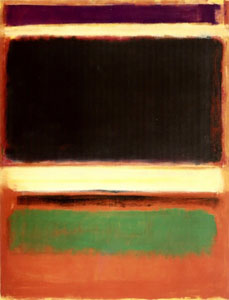
Why blog re: art/health/parenting? Because Rothko makes my heart sing and mind feel calm.

Why blog about art, parenting and health? Well, I suppose, one blogs what knows. Better yet, one blogs what one is passionate about. Gee, the kids are an easy one but why the art-medicine combo? Here’s my take on that: art is good for our souls, our hearts and brains. Think of the calmness that runs through you when you look at a beautiful landscape, photograph or painting. Think of how you reflexively take a deep breath at the beginning of a beautiful piece of music. Or how happy you feel when enjoying the artistry of a well presented meal (even better when enjoyed with some warm jazz playing in the background and good friends to laugh with). Beauty calms our souls. Not all art is beautiful; some art disturbs us and makes us think and question. This stretching of our minds also feels good in a deeply fulfilling way.

Happy minds, calm souls = health. The evidence for a mind-body connection is endless and strong. So, find your beauty, find art, be it painting, music or food, that makes your heart sing and stretch.

I have a favorite painter. Not one most people “get”. So, often those friends of mine that are subjected to chatter about art get to hear about Mark Rothko. Inevitably they are puzzled. Rothko is famous for painting large canvases covered with blurry-edged blocks of shimmering colors. They are often vibrant but, later in his life became dark. In the beginning of his career he painted more representational work; things that looked more or less like what they were. Then, as many painters do, he evolved his efforts towards abstract art. He became one of the leading figures in the New York “school” of Abstract Expressionism. In this evolution he had the expressed goal of guiding the viewer of his canvases towards an inner exploration. He intended to transcend their thoughts to a place of meditation of the most basic of human emotions. Famously, he commented that one who thought of his work simply as being studies in color had not seen

people break down and cry when confronted with my pictures shows that I can communicate those basic human emotions . . . The people who weep before my pictures are having the same religious experience I had when I painted them. And if you, as you say, are moved only by their color relationship, then you miss the point.

So, Mark Rothko’s work for me illustrates this connection between art and health. Viewing, listening, experiencing art as a path towards inner strength and calmness that in turn gives us increased health. A gift indeed, to give our children from a young age. And, a reason for writing about the mix of art, health and parenting.

Medicine and art. Art and medicine. A long paired combination but why?

Medicine and art. Art and medicine. A long paired combination but why? Indeed Medicine is termed an art and the influence of studying art on the developing skills of doctors is currently increasingly touted. I have been thinking about this combination and began to write out my thoughts but, while doing so found a beautiful piece to share. The Journal of the American Medical Association features works of art on the cover of every issue. The long-standing cover editor, M. Therese Southgate, MD had the words below to say about why JAMA has kept art so central to its mission. Her words at least in the consideration of the connection between visual art and medicine, are so complete and beautiful they seem to have gotten me out of having to write much more of a post today!

The question I have been most frequently asked during my years with the JAMA covers is: “Why art on the cover of a medical journal? What has medicine to do with art?”

Let’s look at what medicine and art have in common:

First, they share a common goal: to complete what nature has not.

Second, they have a common substrate, the physical, visible world of matter.

More significant, however, are the similar qualities of mind, body, and spirit demanded of the practitioners of each, painter and physician.

Chief among them is an eye: the ability not only to observe, but to observe keenly — to ferret out the tiny detail from the jumble of facts, lines, colors — the tiny detail that unlocks a painting or a patient’s predicament.

Observation demands attention, and this is the key to both art and medicine. Attention is nothing more than a state of receptiveness toward its object, the artist to nature, the viewer to the work of art, the physician to the patient. It is no accident, I believe, that clinicians — or treating physicians, as they are often called — are referred to as “attending physicians.” “Attention” and “attend” are both derived from the same Latin root meaning “to stretch toward.”

Many more “affinities” exist between medicine and the visual arts, but I will close with just one: Medicine is itself an art. It is an art of doing, and if that is so, it must employ the finest tools available — not just the finest in science and technology, but the finest in the knowledge, skills, and character of the physician. Truly, medicine, like art, is a calling.

And so I return to the question I asked at the beginning. What has medicine to do with art?

I answer: Everything.

That’s my opinion. I am Dr. Therese Southgate, Senior Contributing Editor of JAMA.


Taking kids to museums (without having competition-crazed museum runners)

So, I like to talk about art and some of my friends even listen…some join in. I got a nice email from one of the latter group yesterday. He had taken his daughter to a fine arts museum in a nearby city wanted to let me know he had “used” some of the ideas about art I had shared with him. Now, I don’t recall sharing all that much - likely just rambling on about some Art History 101 that I could still pull out of the distant past. In the museum his 10 y/o started asking all kinds of questions; he said

I was glad to have some “good” explanations for her

She asked first why the Impressionists were so-called. My friend responded that the name had something to do with the focus on quickly capturing an “impression” of a landscape setting. He then went on to focus on the brush stokes and what they looked like; his daughter was fascinated by

the fact that he could go up close to a painting and just see a kaleidoscope of short heavy brush strokes, like a collection of random dots or squares..and then as she moved back, the painting would come to life, she could suddenly see the grass waving in the wind, or the water shimmering.

I was thrilled! This is a friend who has no art background or art education other than being curious and happy to learn. He talked about the art with his child without fear of getting it wrong - just dove in and had fun. This is such a key point. Our kids are like sponges, they are curious and want to soak up what ever tidbits of fun facts you toss their way when it comes to art. So, find chances to stand with your child in front of a work of art and open a conversation. The art can be found almost anywhere, local galleries, gift shops, even graffiti can be thought-provoking. Trips to museums can of course be great but - may seem daunting. Here are some ideas for making them fun:

  • Walk at your child’s pace and follow their interests. Let them lead the way and define which works of art are worth a longer look
  • Babar’s Museum of Art is a good book for young kids with the theme of setting kids free to interpret art in their own way. It suggests that when they have paused to look longer at a work ask them

What do you see? Tell me about this.

  • Volunteer a mini “lecture” about anything you can remember (I can help you learn a few bits over time). Improvise! Deliver with enthusiasm without concern for accuracy - you can always check your facts later.
  • Bring pads of paper, pencils and eraser to enjoy trying to sketch your own Picasso or Degas to take home.
  • A girlfriend of mine a few years ago gave me her tip for museum-going with kids. She always started at the museum gift shop (but with a clear understanding the stop was not for toys) and allowed each child to choose a handful of postcards that they liked. Then using the postcards they embarked on a scavenger hunt through the museum to find the works (the cards in museum shops invariably depict works of art on display at that time). I tried it and it failed miserably for me by turning my three kids into competition-crazed museum runners. However, for other children this may work really well - try it and see!

The goal in any case is to get your children interested in and talking about art. They are an easy audience - just about anything you say will open the door for more questions and fun

Returning to my friend’s attempt to answer his daughter’s questions. He did incredibly well. The Impressionists were very focused on the depiction of light and how it changes throughout the day. This can be most clearly shown to kids when looking at Claude Monet’s work. A great question for a child when looking at any landscape but, especially his is

“tell me what time of day you think the painting was done”.

In fact, you could then tell them that the term “Impressionists” came from a derisive review of one of Monet’s paintings entitled “Impression, Sunrise”. It was reviewed and judged to be unfinished in its appearance (the Impressionists began their work on the heels of much more “realistic” art like that done in the neoclassicism and romanticism periods). The group of artists Monet was exhibiting with at the time (all the big guns in the impressionist movement - Renoir, Pissarro, Degas, etc) shared his interest in qualities of light and they adopted the name “Impressionists” as a way of snubbing their noses at the poor reviews. Well, history was certainly a better judge.

“I’ll never be an artist!” or, how our talking about art at the dinner table started

This business of teaching my three kids about art has several roots. I am most assuredly a frustrated artist. Frustrated mostly by lack of real talent. Frustrated partly by lack of time. So, without talent and time to make my own art I like to read about art, think about art and talk about art with anyone who will join in with me. It can be hard to find similarly obsessed partners but I was thrown a crumb of interest by my daughter years ago and have used it ever since as the cornerstone for a great ongoing family discussion. She was in preschool at the time. I found her in her bed feeling sad one evening and asked why?

“I’ll never be an artist” she said.

Why?

“Because my pictures never look like what they are supposed to look like”.

Now, she was in a fabulous, progressive parent cooperative preschool. One where part of the training of the participating parents was a lecture on how to encourage our budding artists.

“Never ask them what it is. Ask them to tell you about it!”

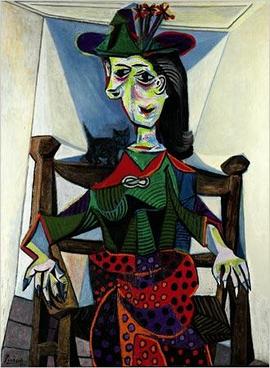
Even with this she still felt pressure. In her preschool world, enormous pressure. Her art did not look like what it was. Well! That was an easy one for me (the frustrated artist and college student of art history)! And, out spilled a nice lesson on abstract/modern art. Of how great, respected art often looked like…nothing much. I talked of Picasso, Rothko and Pollock. It was Pollock she grabbed onto as her own personal hero.

Why should you talk with your kids about art? Well for one thing, our schools can no longer afford to. With nationwide school budget struggles art has often been the first thing to be cut. If you don’t it, teaching art may not be done at all. So, why do kids need art education in the first place? How about this? Study of art and the appreciation for the beauty in the world surrounding us has clearly been shown to improve student’s performance in school, especially for low-income students. But art education is important for all students:

“At the heart of a solid education in the arts are the appreciation of beauty and the aesthetic qualities of our lives and society; the ability to communicate the ineffable through images, music and movement; and the appreciation of diverse cultural expressions“.

The quality of the art education left in schools varies. All too often our children are given a pen, crayon or brush with a blue print to follow. My eldest was corrected for using the wrong color for the leaves in his picture - never mind the fact he is “color blind” - it was the “wrong color”, in other words, not green.

Years later when my youngest son was in kindergarten, Pollock came up again. It was art day (see what I’m saying? - just one day given to art….even in kindergarten, even in liberal California!), they were given paints, paper and set free. In a bit, his teacher came by, he smiled up at her and announced that he was painting a Jackson Pollock. She had the wisdom to smile back and say “tell me about it”.

So, readers, part of my goal here is to encourage you to talk about art with your kids. I know this is daunting. My closest friend is not much of an art enthusiast; through her I understand that this art business in no small task. Let’s try together. Let me help start the conversation in your home.

A Mom First (subtitled: up all night with vomiting 11 y/o)

In the office I am often reassuring parents that there is nothing unusual happening when there kids seem to be “sick all the time”. Primarily they are getting upper respiratory tract infections (URIs) which are called “common colds”. These are called common for a reason - the AAP states that children have 8-10 colds in their first two years of life; I usually explain that parents should expect that their school-aged kids will have 6-10 infections in any given year. This time of year there is more floating around that the common cold; there are also lot of vomiting and diarrheal illnesses. Of course our little monsters share all these germs making it hard for a household of kids and adults to stay well.

So in new-blog-post #2 I am here to tell you that, sister, I am right there with you. I fell asleep last night dreaming up another sort of post…it was a lovely one about Alexander Calder and happy art. However, after a night of caring for the third vomiting child in 2 weeks I have changed my mind. I too am left wondering “what the heck”? Since late August (when school started) I am certain there have been no more than a handful of days when all of the 5 of us have been healthy. Colds followed by sinus infections and new colds. Now vomiting mixed with cold after cold. Why is it so hard to stay well? Rationally the doctor in me knows why. Cold viruses are primarily shared by person-to-person contact with contaminated secretions. Meaning that little monster #1 wipes their runny nose and touched the doorknob, the refrigerator, the Lego, the pencil etc and then Monster #2 (or sweet innocent mom) follows behind and touches the same surface. To inoculate themselves they then absent mindedly touch their own nose/eye/mouth. And presto…in 2-3 days a new cold is born. Similar scenario with the throw-ups but with the added bonus that in that case monster #1 may not even be sick but can be shedding virus everywhere they go. Of course, hand-washing helps but - even the fastidious amongst us forget at times.

Okay, back to the real world…laundry load #5 needs to be put in the dryer. See? I’m right here with you!