Monthly Archives: June 2011

DSC_0556

Putting A Name To It

Four years ago my brother-in-law suddenly, and to us unexpectedly, committed suicide. It was a violent and selfish act, devastating in a far-reaching way. He hurt those who loved him, and in unforeseeable ways he hurt even those who did not know him. My children had loved him and were stunned. Their classmates in 6th grade, 3rd grade and kindergarten who did not know him, learned the story from our kids. Imagine! The children in my son’s kindergarten had to learn about suicide far too soon; it was impossible to keep the story silent in our relatively small community. And yet, would silence have been desirable? I think not.

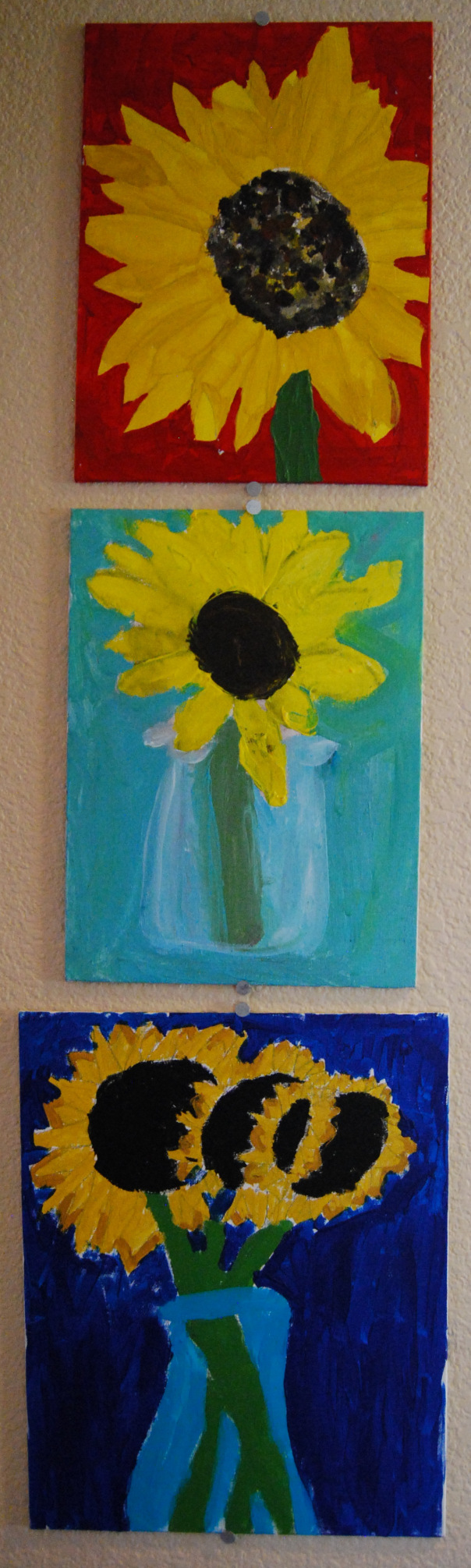
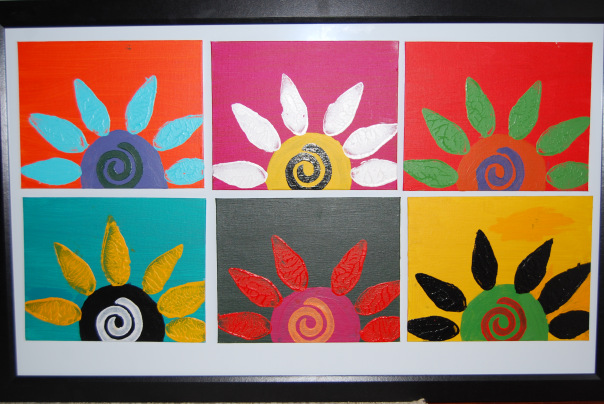
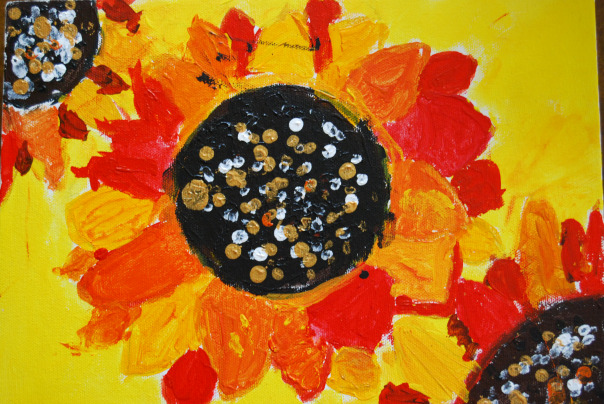
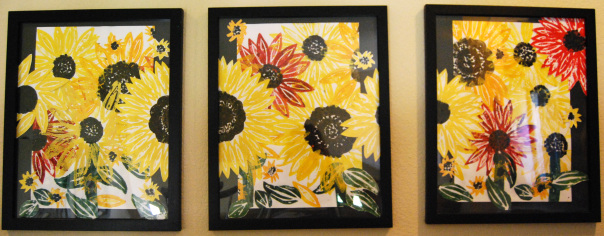
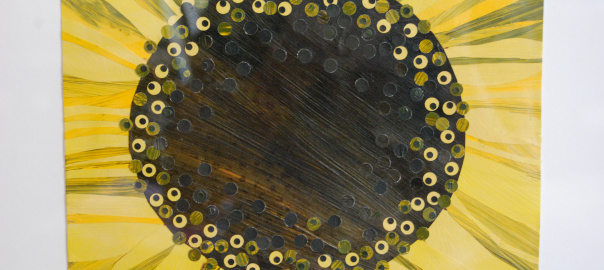
To help my children grieve and to have a designated time to remember his life we have begun a tradition. Each year our local chapter of The National Alliance on Mental Illness (NAMI) holds a sunflower art contest. The contest is held during the same week he died. We talk about ideas for our entries for weeks then, come together and work, creating individual and group entries. Our neighbors have even joined in. It gives us a set time to personally or collectively, openly or silently think about him.

This year after painting some fabulous flowers, our neighbor Delaney felt stumped. The contest entry asked for a name. What a challenge! Delaney agonized. I suggested that leaving it untitled was acceptable and tried to explain that many of the best artists do just this. But untitled felt, I am guessing, unfinished.

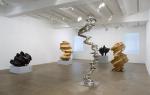
Shortly after I had the good fortune to be walking through a fabulous museum soaking up the art there. The titles kept jumping out at me. Certainly many artists do leave their work untitled but, often an artist is asking us to focus our attention in a direction of their choosing. Richard Wentworth’s room filled with books floating suspended above our heads is named “False Ceiling”. Perhaps a gesture pointing us towards the falseness of the notion that books contain all knowledge in unbiased, unlimited form? At first Tony Cragg‘s sculpture in the Istanbul Modern Museum looks like a study in sinuous, sensuous form. But after reading the title, “Ugly Faces” that is all one can see. Gone is the sexy sculpture, leaving behind just faces in profile. Ugly ones.

Which brings this rubber band story back to my brother-in-law’s death, those kindergarteners, and the efforts of NAMI. By naming the thing in front of us we make it hard to ignore like those “Ugly Faces”. “False Ceiling” became a statement that was hard to stop thinking about. By being comfortable with naming depression we cannot ignore it, we make treatment attainable. NAMI strives to help us put a name to what is all too often right in front of us. To name it allows us to help those who suffer. To leave it untitled allows us to make our own personal and perhaps incorrect interpretations. Wentworth said:

I think I shouldn’t give things titles. I sometimes cringe at it. But it’s like naming the cat. There is something about the act of nomination — sometimes I really love it, like launching a ship.

Sometimes we cringe from naming the suffering in front of us. However, doing so might launch a ship or two…ships of hope.

©

Delaney’s painting? It was enthusiastically named “Bust a Bloom” .

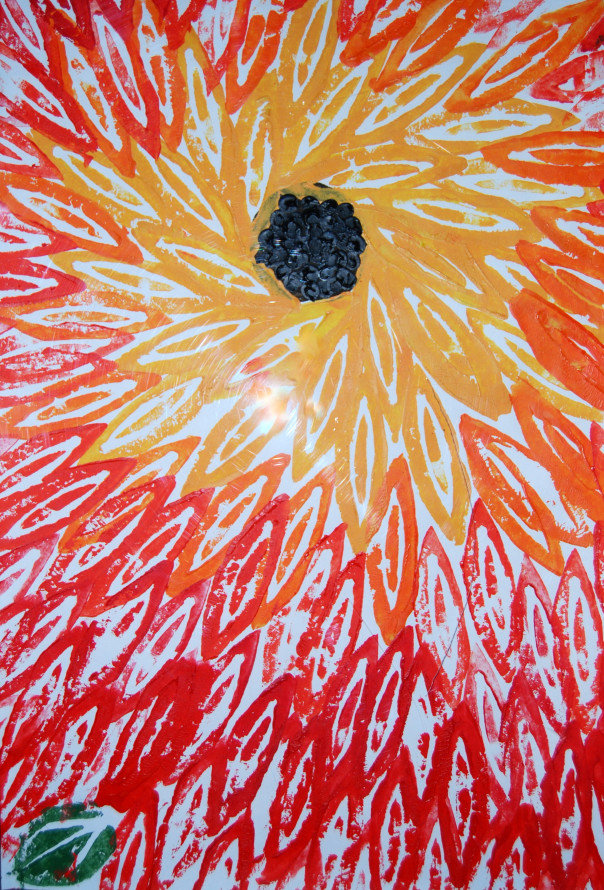
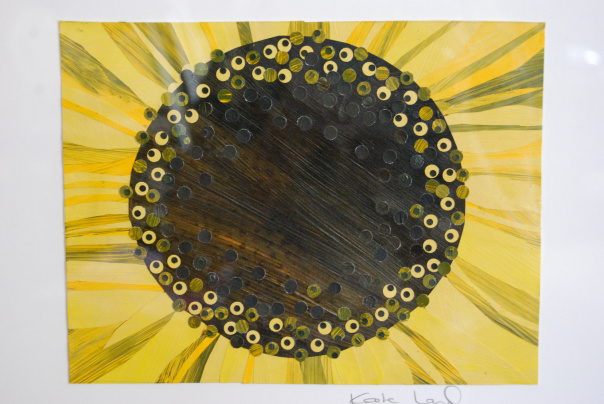
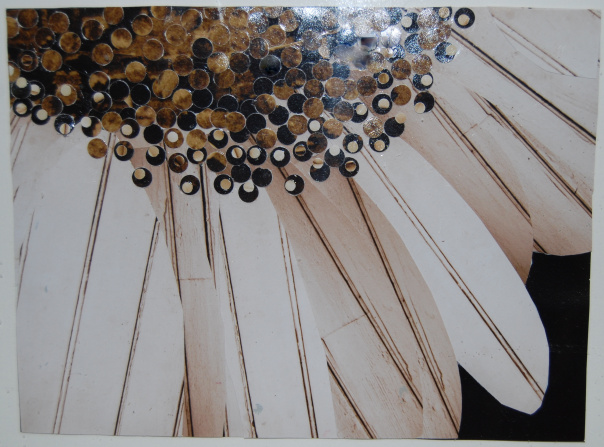
A gallery of some of our sunflowers:

Inner-space-...-the-Mark--007

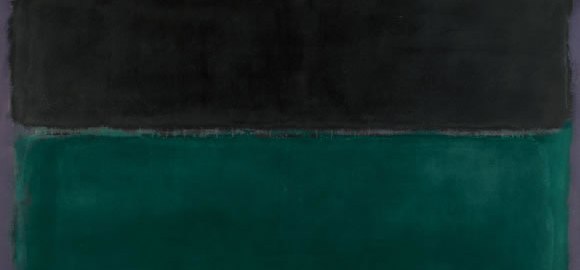
The Rothko Story

Let me tell you a tale. A tale of the depth of emotion that art can evoke. A tale that will make you pause. A tale I hope will demonstrate why art history is valuable.

As trite as it sounds, I have a favorite artist, Mark Rothko. And, speaking of trite, I was looking at a You Tube compilation of his work today. At the end were comments, lots of comments. I started to read a few but got hung up on the first one. A comment so glaring for demonstrating the author’s complete lack of understanding of the history behind the art that it catapulted me here to write.

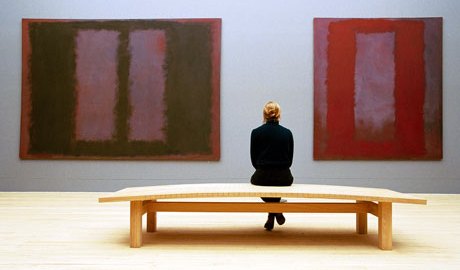
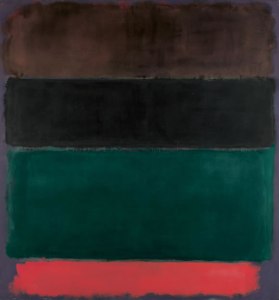
Mark Rothko (1903-1970) was an intelligent and philosophically inclined man who won a scholarship to Yale but left New Haven after two years to join the Manhattan art scene (he was later awarded a degree from Yale). There he began his art education with classes in representational drawing and painting. Ultimately however, he became known for abstract painting and would be placed in the group of artists working in the 1950’s called the Abstract Expressionists. Rothko filled huge canvases with large blocks of vibrant colors.

I paint very large pictures because I want to create a state of intimacy. A large picture is an immediate transaction. It takes you into it.

His technique was novel and refined; he painstakingly applied series of layers of thin washes of colors that added up to creating a luminescence and a remarkable shimmering effect.

Rothko disliked giving up these masterpieces of scale and light and color.

It’s a risky business to send a picture out into the world. How often it must be impaired by the eyes of the unfeeling and the cruelty of the impotent who could extend their affliction universally!

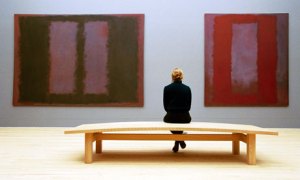
In an attempt to control the fate of his canvases he became famous for exerting control over how they were displayed. They were to be hung so that there was little white wall surrounding them; preferably in a room with only other paintings of his. The paintings were to be hung as low as possible and in quite dim light. He meant the paintings to be ideally viewed at a distance of only 18 inches so that the (single) viewer would be enveloped by the experience as Rothko had been enveloped while painting them (he wanted to create a feeling that the painting was not static but, continuing to evolve as it was viewed). And, he intended the viewer to have quite the experience. In his fabulous book The Power of Art, Simon Schama says “no other painter in the history of modern art - perhaps in the entire history of painting - was so obsessed with the relationship between the artist and his audience”. His goal was that we would be transported by his art. Once when a reviewer commented that Rothko was simply a master of color he scathingly responded:

I am not an abstractionist. … I am not interested in the relationship of colour or form or anything else. … I’m interested only in expressing basic human emotions — tragedy, ecstasy, doom and so on — and the fact that a lot of people break down and cry when confronted with my pictures show that I communicate those basic human emotions. … The people who weep before my pictures are having the same religious experience I had when I painted them. And if you, as you say, are moved only by their color relationships, then you miss the point!

In 1958 Rothko was offered an enormous (for the day) retaining fee to produce a set of murals to hang on the walls of the new Four Seasons restaurant in the building designed by architect Mies van de Rohe and owned by the Seagram’s distilling company. He then rented an old gymnasium and erected scaffolding to model the space at the Four Seasons and began working. In a short time there were dozens of canvases of red, maroon, black, brown and flaming orange. From these he planned to choose the best nine to completely cover the walls all around the main dining. They would thus become more like murals, than individual paintings.
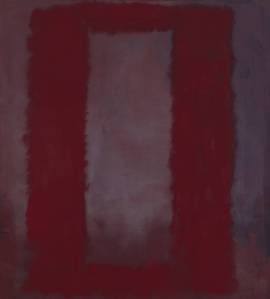
Rothko’s works became sought after, his income soared to 60,000 in 1959 and yet, he mistrusted the wealth that bought his work. Simon Schama explained that Rothko’s fear was having the paintings become “overmantels” or expensive wallpaper for the rich. Perhaps it was this fear that motivated Rothko to go with his wife to the newly completed Four Seasons restaurant one night in the summer of 1959. There they dined amongst the glittering decor, clinking glasses and stylish Manhattanites. There it suddenly be came clear to Rothko that his murals were not meant to hang on those rarefied walls. He felt, likely rightly so, that the diners would not understand his work let alone have the sort of emotional experience he intended for a viewer to have. He turned down the money - approximately $2 million.

Anyone who would eat that kind of food for that kind of money will never look at a painting of mine.

Then followed years of struggle with alcohol and creation of paintings of an progressively dark palette. These somber paintings seem to represent a final step down into a darkening of spirit. His health failed, his marriage failed and he continued to drink and smoke. He became increasingly depressed.

On February 25th, 1970 Mark Rothko was found dead in his studio, his wrists slit. Hours later on the very same day, a shipment of nine Seagram murals arrived at the Tate Gallery in London to be hung in a room alone according to strict specifications. Jonathon Jones wrote in a recent blog post for the Guardian that “Rothko was fascinated by the idea of shaping a room with art, using abstract painting as a type of architecture”. He meant to create a physical space where his canvases could work with the surrounding architecture to move viewers to meditate. He meant to induce a religious experience. Upon his death he had created just this.
For dear reader, now that you have heard this tale, you can see that art history is powerful. That an understanding of the history of a work of art can create a heightened appreciation of it. To the uneducated You Tube viewer, Rothko’s paintings may look easy (they are not - remember the groundbreaking layering of pigment he developed and the precision with which he displayed them). To the uninformed viewer they may appear an attempt to generate exorbitant sums of money (they were not- remember his mistrust of wealth and that his constant desire to have the viewer emotionally connected led him to turn down $2 million). So, the moral of this story might be that one should ask about art before you judge. And then with your knowledge, enjoy.

~

This is a powerful tale and by telling it to your children over dinner and showing them some of Rothko’s art (try the youtube compilation) you will begin to hook them on the world of art. You may worry about telling them about Rothko’s suicide but then, you could view this part of the tale as a “teachable moment”. It presents to you an open door to start further dinner discussions about depression, addiction and suicide. These are all parts of the world experience that we hope our children avoid. You have a powerful ability to influence their choices if you are willing to discuss these difficult topics. It has been sown that children whose parents frequently talk with them and clearly convey their expectations regarding drug and alcohol use are much less likely to end up abusing substances. Feel your power and start talking. To help here are a few resources.
DSC_0121

Balanced Lives - with gratitude

Two weeks ago I sat in an open air cafe in Istanbul lazily eating mezes or appetizers, drinking dubious Turkish wine and talking with my godmother. What a gift! As we sat and chatted the conversation turned where it usually does between two doctors. Boring anyone around us, we always seem to find a way back to the days of our training, trading war stories from the hospital days.

In this case my paltry stories were truly weak compared to hers. Her training was Herculean. She graduated from the University of Virgina medical school sometime in the early 60s as one of two women in her class, did a residency and fellowship in the South Bronx and has just recently retired from a career as a hematologist. Her hours were brutal (every other night for every year), her education never-ending. If every minute out of the hospital is indeed education lost, she lost little. Except sleep. Among lots of riveting tales of patient care challenges, there was one striking personal story. Late in her residency she was at last granted three days off for Christmas. On Christmas Eve she drove from New York to Virginia but became terribly lost on the familiar drive because of a haze of illness setting in. She arrived on her parents’ doorstep at 2 AM exhausted and feverish only to sleep through most of Christmas and drive back to NY the following day. When she returned to work an attending noticed how ill she was and sent her for labs that ultimately revealed mononucleosis. This was thrilling to her - two weeks of enforced time out of the hospital! Who cares how ill she was - there was freedom and sleep before her!

My experiences as a medical student and resident could not have been more different. Although I trained before there was any attention to national limits on resident work hours, I certainly did not have every other call at all, let alone for years. I managed to insert a pregnancy into medical school, one into residency and much to the chagrin of my now-colleagues, one the first year I graduated. I did not have to become ill to find a balance in my life (although I may have been equally sleep deprived thanks to the 3 kiddos).

I just finished reading a thought-provoking post by Doctor Chris Porter. He wrote of the need to shift our mentality or thinking about hours worked in the hospital. He felt it benefits our profession to be accepting of a balance of hours in the hospital (learning more medicine) with hours out (nurturing our families). How true. I am a product of the shifting tide of thought. I am also made very grateful to those pioneering sorts that went before; listening to my godmother talk made me even more acutely aware of the gifts they gave us today. ©


Addendum: Dr. Porter has another wise post on his blog site: On Surgery, “The Part-Time Doctor”. In it he states “Openly planning to balance work life with family life is mature and admirable”. Hear, Hear!

rothko_red-brown-black-green-red_m

Gifts of Transcendence

I have wonderful friends. Ones who support me and understand me. So, when they heard I was injured and stuck lying around; off my leg for weeks to come, two of the most insightful ones brought me a gift of art. Both went to museums and came back to me with Rothkos. One with a beautiful print and, one with a powerfully written tale of his trip to see a Rothko in my honor. They understand me well.

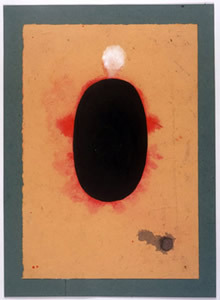
Some works of art have the ability to transport us emotionally to another plane of experience. Certainly music will do this for most of us. Think of the elevating power of the final movement of Beethoven’s 9th symphony, the Ode to Joy or listen to Pachelbel’s canon. Visual arts too have this power. The Shiva Linga paintings that I discussed in an earlier post are a clear and direct example of this. They were painted as devotional images intended for use during meditation to help the believer focus their prayers. The paintings depict one of the forms of the Hindu god Shiva, the god of destruction and transformation. He oversees death and rebirth. These paintings therefore are meant to represent transitional space between creation and dissolution.

Despite my not being Hindu or particularly meditative, I found these paintings absolutely compelling. They are simple and repetitive; painted on found scraps of paper by individual, anonymous practitioners. Similar yet interesting in their differences. As I stared into their central black ovals I felt the world around melting away from behind me while the black space grew to envelope my thoughts.

I have to wonder if Mark Rothko perhaps saw and was influenced by similar paintings. There are parallels to be found in his work: the spare design, simple color blocks and, the intended purpose of transcendence. Rothko meant for us, the viewers stand close to and alone in front of his paintings. He meant for us to be embraced by them. A sensuous, tragic, moving embrace. So now I in possession of my own Rothko’s, feel able to extend beyond the limits of my own experience. I am momentarily lifted beyond the couch and into the enfolding spell that art can provide. ©

Learning to Sit Still on a Spinning World

When I was first a mom I was astounded on a daily basis by the experience. Not to mention, exhausted. The now 15 y/o then wanted to nurse constantly. For hours on end, day and night we would sit together – him happily suckling and me? Well, honestly I was bored. There was a certain low-level trapped feeling; a feeling of being stuck yet again sitting tethered to the little creature. Don’t get me wrong, I loved breast-feeding and we made a great team. It did however, take a while to settle into the experience. That settling came when I learned to enjoy those moments of enforced peace.

There is great beauty to sitting absolutely still and giving into the process of nursing. I had to relax and let the world spin around me – the clothes unwashed, the dinner cold, the business of life unattended to. And in those moments of peace I would often think my clearest thoughts.

Again I find myself forced to sit still on a spinning planet. Forced by an injured leg, to let go of the multitasking productivity the working mother in me prizes. My family laughed at me last night as they scurried around on their good legs and I sat on my hurt bum watching them. They laughed because I mentioned that having my hamstring tendon torn is a lot like breastfeeding. Huh? No one stayed around long enough to hear why; but I kept thinking about this idea. My life is so full of mothering and work. So full of electronic medical records, blogging and Twitter. So filled out by friendship. So full that I lack, almost completely, time for quiet reflection. Now, in a space without the ability to scurry I am left sitting and relaxing. A novel experience? No, but one that is nice to return to.

I am reading Twila Tharp’s book The Creative Habit. She has taught me much about my own developing creative habit. One of the first chapters talks about the squelching effect on creativity of background noise. Noise both literal and figurative. She suggests turning off our computers, our music and skipping the newspaper for a period of time to understand the effect they have on us. That was hard advice to swallow; I have always worked with music playing. I started to drive my 20 min to and from work without the radio. At first the silence was a bit uncomfortable but as the days passed I found that my mind was productively wandering. Bits and pieces of my days were knitting themselves into coherent stories as I drove quietly along.

Breast feeding, healing and silent driving. Less tweeting, less laundry, simpler dinners. Soon I may be positively Zen-like sitting here watching them all run around. Hopefully I will at least, synthesize a few blog ideas while I watch.

©

DSC_1704

Highlights From a Year of Art-looking

My muse has been distressingly quiet lately. Sitting here earlier I was wondering if maybe I need a trip to a museum to stir up the creative juices but, alas… no trip in the works at this moment. So, instead I began thinking through the art I have seen or studied in the past year, turning the virtual pages in my mind. It was a good year for travel; a good year for experiencing art. Here are some of the highlights:

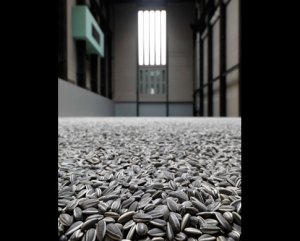
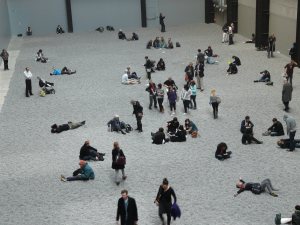
  • Ai Weiwei’s Sunflower Seeds This sculpture presented by the conceptual artist was made up of over one hundred million porcelain sunflower seeds. The seeds we handmade by hundreds of artisans working in small workshops in the city of Jingdezhen, China. The exhibit is meant to evoke thoughts of the role of the individual in society, our increasing numbers and the effects of our needs, wants and demands on the world. It is made all that much more meaningful by the recent arrest of Ai Weiwei.
  • Shiva Linga Paintings These were perfectly introduced by Franck Andre Jamme:The thought has often occurred to me that perhaps never in the universal history of painting, have works at once so mysterious and simple, yet so powerful and pure ever been produced - a bit as if, here, man’s genius had been able to assemble almost everything in almost nothing”. The were created as aids to meditation and indeed they are powerfully meditative. While looking at them, I had to wonder if Mark Rothko studied them such are the parallels between his work and these paintings both in simplicity of design and intended purpose.
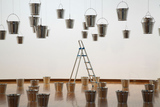
  • Rivane Neuenschwander: Rain Rains This incredible installation in the New Museum in Manhattan was introduced rather limply as: being “an environment of leaking buckets that are controlled from flooding by a Sisyphean recirculation tended to by museum staff in four-hour cycles”. This description fails. Rain Rains formed what may have been the most for me moving few art-related moments of 2010. The slow leaks of water from suspended metal buckets to matched buckets below, formed a symphony of plonkety-plonk sounds that filled the room and my heart. Perhaps this again begs the question of why certain art moves each of us individually so much. Why was there, for me, such transcendental power in this room of “rain”?
  • Tino Sehgal’s This Progress: Surely this would be on the list made by any NYC art-goer over the last year or so. As I walked up the ramps in the Guggenheim I was in turn approached by 4 people of increasing age (from about 11 to 65) who walked with me for a level. As we walked we talked. I was asked in turn (increasing in age and altitude with each question): “what is progress?”, “Is personal choice always good?”, “what is the meaning of the word amateur” and “This is progress?”. I have continued these magical discussions in my mind since.
  • Jennifer Steinkamp’s Rapunzel. I spend much of my time in museums wishing that all good art had a comfortable bench placed right in front of it to facilitate relaxed contemplation. Such seats are rare. Rapunzel is hung in a stairwell at the Crocker Museum. The steps their form an unusual but restful nook to perch in while watching these enchanting swinging vines; perhaps the best “bench” of the year.
  • The ever-moving ephemeral art of graffiti passing by on trains continues to fascinate me.It even inspired some of my own efforts:

©


©