Monthly Archives: August 2011

DSC_0265

Nutritional Soundbite #2: You Serve, They Choose.

One day when I was a resident in Pediatrics I was assigned to work in the gastroenterology clinic. There were not many children to be seen that day. As I waited for a small person with a stomach issue to arrive I picked a book off the shelf and started reading. It was small, had a friendly cover and looked approachable. Indeed, it was a gem. I passed my time that morning reading and the words I soaked up then have stuck with me as I have mothered my three and as I have talked with scores of parents through the years.

The words from this book by childhood nutrition guru Ellyn Satter form the basis of Soundbite #2.

There is an important division of labor in feeding children. Their adults should choose what food they are served. The children choose what to eat and how much. At times parents find it very hard to trust in nature: children are built for success, if trusted they will eat the right amount of food for their bodies. Only the child knows when she is hungry.

Your child will get hungry, eat, get filled up, and stop eating (even in the middle of a bowl of ice cream). Whether your child needs a lot or a little, she instinctively eats as much as she needs. If you follow the division of responsibility with feeding she will automatically eat the right amount of food to grow and be as active as is right for her.

However, if we as parents interfere with this natural rhythm we risk raising children who are either too heavy or too thin for what nature intended. Imagine how confusing it may be to a young child when on one hand her brain knows they are not hungry but their parent is telling them to eat more! Repeat this enough times and the child no longer listens to her body but eats beyond hunger and fills with unneeded calories.

So, fill her plate with good choices. You are obviously not offering soda, chips and sugary cereal all day long. Instead lay out fruits, veggies, cheese, yogurt, milk and whole grains. Then sit back, relax, and trust your very smart child. ©

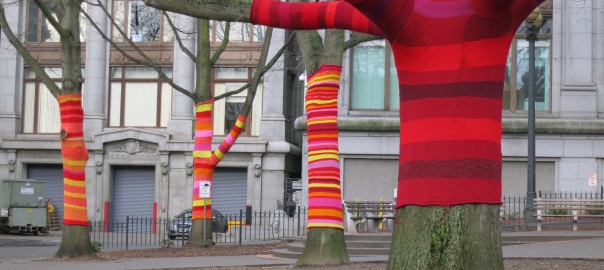
What I Learned From a Patient Yesterday and a Tree Today

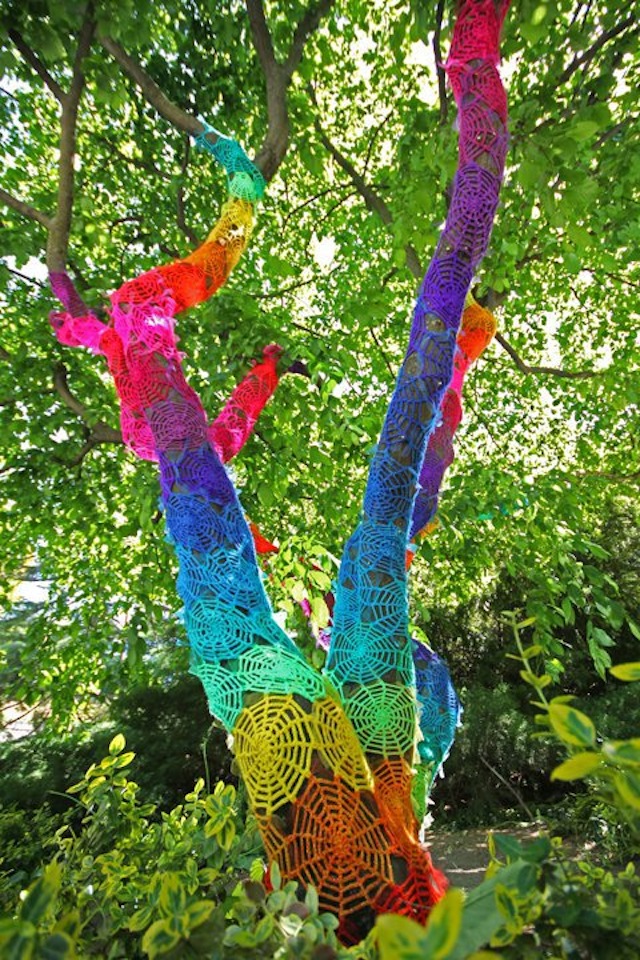
As an addendum to my post: Why Make Art? A New Answer Arises, Stitch by Stitch, I want to let you in on what the crocheted tree made me think about.

First though, I need to start with a really cute three year-old. She came to see me yesterday with her mom and big brother. He was actually the patient, in for an earache or rash or… something. But when I opened the exam room door his sister completely stole the show. She had big blond bouncy ringlets, gorgeous blue eyes and a great smile. She was very proud of herself, and for good reason! She had chosen absolutely the most stunning (blindingly?) outfit I have seen in a month. It was a great sundress with polkadots and flowers in one color palette and twisty hair ribbons in another. The shoes, obviously, were pink. Her ensemble made me smile and it made us both happy.

What we wear has power. We’ve discussed this concept often in my house. Several years ago we had a good friend whose teenage son chose to dress in goth (or emo) attire. Black everything, lots of piercings, unusual hair. My kids found him scary-looking.

I encouraged them to be open-minded and non-judgemental. After all, how you dress is nowhere near as important as how you act, right? If he avoided drugs and alcohol (check), if his grades were good (check), if he treated the people around him with respect (check) then, what did it matter what he wore?

But we decided around the dinner table that how we dress does matter. It can either open or close doors. Dressing in a way that closes figurative doors does not seem wise for a kid headed to college or to the workforce. An obvious point, or perhaps a bit of parental brainwashing on my part.

Another point came to mind today. How we dress also affects the feelings and mood of those around us. Dr. Brain Vartabedian makes this point in part, in his blog post Doctors with Purple Hair:

The argument is always the same: ‘I can be a good doctor with purple hair.’ Of course you can. But this isn’t about you. …A career built on the privileged relationships shared with patients requires consideration of what will make them most comfortable.

In my closet today I surveyed the muted array of clothing colors with a certain sense of boredom. No happy polka dots and clashing ribbons for me. Sure, I could dress to make the parents of my young patients trust me. But where was the happy-inducing outfit? I stood there wondering why adults can’t dress more like three-year old children. Why couldn’t we dress like crocheted trees, decked out in cheerful stripes from head to toe? And in doing so make everyone around us a bit better off. Think of all the happiness that would follow us around through the day!

And, if I dressed as a tree at least my patients would approve. Maybe I need to go shopping. ©

get-attachment

Why Make Art? A New Answer Arises, Stitch by Stitch.

Art makes me think. It has happened before and it is happening now. Funny thing is that I am not just set to thinking by the big, important art but also by art that takes itself less seriously. I am certain that Rodin’s The Thinker has never made me think. But Calder’s whimsical Performing Seal has.

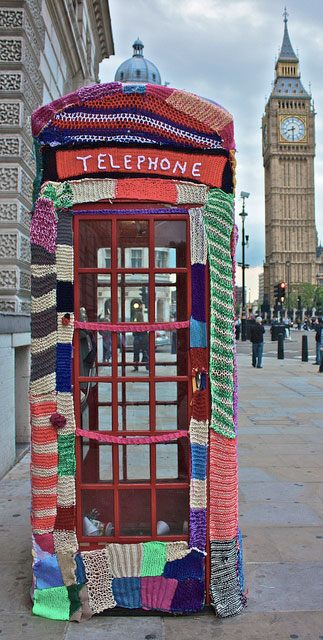
There is art afoot, art about towns today that is making me smile. And yes, think. Is it Art? What is art? Why make art? A new answer arises: to make us smile again. Maybe at times that is all we really need from art.

Have fun looking and oh yes, definitely show your kids!

http://ht.ly/61VST Scroll two down, click under the tree on more information to find “Yarn Bombing / Guerrilla Crochet – A Collection”.

Nutritional Soundbite #1: Make Snacks Count

Young children often need to snack frequently as they go through the day. They have small tummies and high energy needs. Big kids need lots of healthy food to keep up with their incredibly rapid growth through the teen years (you should see my 15 y/o athlete eat). It may at times seem hard to get all the nutrients that are needed into your child! Many parents feel that it is a challenge to get their child to eat all of the recommended servings of fruits, veggies and whole grains. You can use your child’s need to snack to help you meet his nutritional goals. In other words, make snacks count!

Ways to do this are to provide snacks that are healthy and fun. Make sure that snacks you offer are not junk or processed food but, good, simple, real food. Some examples include:

  • Celery sticks with a side of cream cheese and raisins – young kids can create “ants on a log” and eat them!
  • Apples and peanut butter-tofu dip (1/2 cup tofu, 1/2 cottage cheese, 3 TBS peanut butter, 1TBS honey, 1TSP vanilla - processed till smooth)
  • Tortilla chips and salsa
  • Dried fruit
  • Pretzels and small chunks of cheese – they can form building units by sticking the pretzels into the cheese before popping them in his mouth
  • Popcorn (preferably what you pop yourself in canola or other healthy oil or low-fat microwave popcorn).
  • Cut up fresh seasonal fruit
  • Carrots, snap peas, cucumbers and a little low-fat ranch dressing for dipping
  • Applesauce or yogurt (look for lower sugar versions, try greek yogurt for extra protein)
  • Smoothies made of yogurt, frozen bananas, a little orange juice and berries.
  • banana bread, zucchini bread or pumpkin muffins

Children love to help you in the kitchen - they also think it is fun to eat what they cook! So, you can use this willingness as a tool to help them get some healthy snacks in. For example, bake some pumpkin mini-muffins or zucchini bread (use 1/2 whole wheat flour, use canola oil and add some flax meal to up the nutritional worth) together and enjoy some together with a glass of skim milk. Try adding pureed white beans to your favorite cookie recipe to add protein and fiber. Then if you have made a double batch, you can freeze some and stick them in his school lunches.

Using these baked treats as snack can help address the issue of forbidden foods. I discussed this in my post “Sugary Cereal, Cornchips and S’Mores or, Moderation in All Things” - if we occasionally allow our kids to eat foods we view as nutritionally unsound for regular intake then they crave them less. Research has shown that they in the end, eat less of these forbidden foods. So, if you occasionally greet them after school with a plate of chocolate chip cookies they will be better off for it. And who’s to know that the cookies are high fiber?

When you do let them watch TV use that as a good snacking opportunity. Hand your child a bowl filled with an assortment of fresh fruits and veggies. Try carrot pieces, strawberries, black olives, bell peppers and cucumbers. It is amazing how much they will devour without even noticing!

One last word, while young kids do often need a snack, some days they don’t. Children do not grow as much some days as they do on other days – therefore their appetite changes. Your job is to offer the healthy snacks and his job is to decide if he is hungry enough to eat it. If not – it is okay, he will want some another day. Which perfectly introduces my nutritional soundbite #2 …

My Top 10 Nutritional Soundbites

  1. make snacks count
  2. you serve, they choose
  3. limit drinks that taste sweet
  4. don’t worry
  5. don’t be a short order chef
  6. go with their strong suits; average nutrition over a week or month
  7. talk with your kids about nutrition
  8. allow treats
  9. raise cooks
  10. family meals

What’s a parent to do? The news is so full of nutritional advice it can seem impossible to know where to begin an attempt to feed children well. Sugar is increasingly viewed as a dietary mistake. Fiber is fantastic for preventing constipation, irritable bowel syndrome and is linked to a reduction in colon cancer. Blueberries and walnuts have antioxidants, salmon and tuna have vitamin D and omega-3 fatty acids. Too much tuna has too much mercury. Too much cow’s milk can lead to iron-deficiency anemia. Too much soy milk is risky as well. How does a parent put all of this advice into action?

My patients’ parents often ask questions about nutrition. I offer them a collection of nutritional advice soundbites. Over the next few days I will share details of my top 10 of these soundbites. Please, comment and join in with yours!

Sugary Cereal, Cornchips and S’Mores or, Moderation in All Things

What’s a parent to do? The news is so full of nutritional advice it can seem impossible to know where to begin an attempt to feed children well. Sugar is increasingly viewed as dietary suicide. Fiber is fantastic for preventing constipation, irritable bowel syndrome and is linked to a reduction in colon cancer. Blueberries and walnuts have antioxidants, salmon and tuna have vitamin D and omega-3 fatty acids. Too much tuna has too much mercury. Too much cow’s milk can lead to iron-deficiency anemia. Too much soy milk is risky as well. How does a parent put all of this advice into action?

My patients’ parents often ask questions about nutrition. I offer them a collection of nutritional advice soundbites; the top ten of which may form my next blog posts. One bit of “wisdom” I have always put out there is this: “Make snacks count”. Snacks are a great chance to get in the foods we most want our kids to eat. As a mom of 15, 12 and 10 year old kids I certainly try to practice what I preach. Sometimes though, I fail. It struck me today as I watched the 12 year old gleefully eat her bowl of very sugary cereal complete with colored marshmallow bits, that there is something about summer vacation that seems programmed to allow these failures.

My childhood summer vacations were spent on the beaches of Virginia, North and South Carolina, in the woods around my grandparents home on the Chesapeake bay and on a lake in the Blue Ridge Mountains. They were formed of long days of freedom, swimming, exploring and happiness. Sand and heat, mosquitoes, crabs and fireflies, lemonade and Fritos formed the texture of the days.

Fritos? Yes. Now looking back on those days I realize how much of my summertime memories center around foods enjoyed only then. Some of course were healthy summertime treats, some were not. S’mores, Fritos and the occasional bowl of sugary cereal were a wonderful break from the extremely healthy diet my mother usually fed me. Now I realize that I have programmed my own children to expect the same sort of nutritional holiday. Sugary cereal never enters my house and to their credit, the kids don’t ask for it either. They know though, that on vacation away from home they are allowed to get a box of the junkiest cereal their little hearts desire. It seems to me that this kind of holiday has a place in their lives.

I may have benefited from being allowed to lie in a sunny spot on a houseboat with my bowl of chips. How? It taught me moderation. As the Roman writer Petronius said:

moderation in all things, including moderation.

Perhaps if we allow our kids the occasional nutritional holiday they will crave the junk less regularly. Outright prohibition doesn’t seem to work well, for adults or for children. Allowing junk food holidays at times provides us an opportunity to discuss why it is usually not allowed. Maybe they will appreciate it more. I do know for certain that as I sit here now I am certainly enjoying my bowl of Fritos.